A strong personal injury case starts with a thorough intake form. The questions you ask in the first client meeting determine whether you capture the details that matter — or spend weeks chasing missing information. A well-structured form also sets client expectations early and gives your legal team a clear picture of the claim's viability.
This template covers the essential questions every personal injury intake form should include, organized by section and case type. It also includes case-specific questions for auto accidents, slip and fall, medical malpractice, and workplace injuries. Copy what applies to your practice and adapt the rest.
Client Identification
Accurate client details form the foundation of every personal injury file. Errors in names, addresses, or contact preferences create problems throughout the case lifecycle. Collect these upfront to avoid delays later.
Personal Information
- Full legal name
- Date of birth
- Social Security number
- Driver's license number and state of issue
- Current address (and previous addresses if less than 5 years at current)
- Marital status and spouse's name (if applicable)
- Number of dependents
Contact Details
- Home, cell, and work phone numbers
- Email address
- Preferred method and time of contact
- Permission to leave voicemails and send text messages
Emergency Contacts
- Primary emergency contact: name, relationship, phone number, address
- Secondary emergency contact: name, relationship, phone number, address
Incident Details
These questions establish what happened, where, and when. The specifics here drive liability analysis, settlement calculations, and litigation strategy.
Date, Time, and Location
- What was the exact date and time of the incident?
- Was it during daylight or nighttime hours?
- Where exactly did the incident take place?
- Was it on public or private property? If private, who owns it?
- Were there any weather or environmental conditions that played a role?
- Had you been to this location before?
Cause and Nature of the Injury
- What type of incident caused your injury?
- Which body parts were injured?
- Did you lose consciousness?
- Were you taken to the hospital by ambulance?
- Have you received medical treatment since the incident?
- Are you still receiving treatment?
- Do you have any pre-existing conditions that were aggravated?
Witnesses and Evidence
- Were there any witnesses? Names and contact information?
- Did anyone admit fault at the scene?
- Were police called? Was a report filed?
- Did anyone take photos or videos of the incident?
- Are there security cameras that may have recorded the event?
Personal Injury Intake Questions by Case Type
The core intake questions above apply to every personal injury case. But different incident types carry unique liability factors, evidence requirements, and statute of limitations considerations. The following case-specific questions help you capture details that generic forms miss.
Auto Accident Cases
Motor vehicle collisions involve specific details around vehicles, road conditions, and driver behavior that directly affect fault determination.
- Were you the driver, passenger, or pedestrian?
- What is the make, model, and year of each vehicle involved?
- Was a traffic citation issued to either party?
- Were you wearing a seatbelt at the time of the collision?
- Did the airbags deploy?
- What were the road and traffic conditions at the time?
- Do you have the other driver's insurance information?
- Was a tow truck required for any vehicle?
Slip and Fall Cases
Premises liability cases hinge on whether the property owner knew about the hazard and failed to address it. These questions establish those facts.
- What surface condition caused the fall (wet floor, ice, uneven pavement, debris)?
- Were there any warning signs or barriers in the area?
- What footwear were you wearing at the time?
- Had you noticed the hazardous condition before the fall?
- How long had the hazard been present, to your knowledge?
- Who is the property owner, manager, or tenant responsible for maintenance?
Medical Malpractice Cases
Medical malpractice claims require detailed information about the provider, the procedure, informed consent, and the standard of care that was breached.
- What medical procedure or treatment led to the injury?
- Who was the treating physician or healthcare provider?
- At which facility did the treatment take place?
- Were you informed of the risks before the procedure (informed consent)?
- When did you first realize something had gone wrong?
- Have you obtained a second medical opinion?
- Do you have copies of all relevant medical records and consent forms?
Workplace Injury Cases
Workplace injuries may involve workers' compensation, third-party liability, or OSHA violations. The intake questions need to cover both the employer relationship and the safety conditions.
- What is your employer's name and address?
- What were you doing at the time of the injury?
- Did you report the injury to your supervisor? When?
- Has a workers' compensation claim been filed?
- Were any safety protocols or OSHA regulations violated?
- Was safety equipment provided and being used at the time?
- Have any coworkers experienced similar injuries or hazards?
Medical Information
Medical documentation directly supports the claim for compensation. Gaps in treatment records or unexplained delays between the incident and first medical visit can weaken a case. Capture the full treatment timeline from day one.
Initial Treatment
- When did you first seek medical attention after the incident?
- Which healthcare facility did you visit first?
- What was the initial diagnosis?
- What treatments were prescribed immediately?
- Did you receive emergency care at the scene?
Ongoing Treatment
- Are you currently under medical care for these injuries?
- What types of ongoing treatments are you receiving (physical therapy, surgery, medication)?
- How often do you attend medical appointments related to the injury?
- Have any future surgeries or procedures been recommended?
- What medications are you currently taking for the injury?
Medical History
- Do you have pre-existing conditions that may affect the current injury?
- Have you had previous injuries to the same body part?
- Were you taking any medications prior to the incident?
- Have you been treated for similar symptoms before?
Healthcare Providers
- Who is your primary care physician?
- What specialists have you seen for this injury?
- Have you been referred to any rehabilitation facilities?
- Have you received a second opinion on the diagnosis or treatment plan?
Legal Aspects
Prior legal history and insurance details can complicate the current claim -- previous lawsuits raise credibility questions, and existing liens may reduce the client's recovery. Address these early.
Previous Legal Actions
- Have you been involved in any previous personal injury lawsuits?
- What was the outcome of prior legal actions?
- Are there any ongoing legal cases related to your injuries?
- Have you filed for bankruptcy in the past 7 years?
Previous Attorneys
- Have you consulted any other attorneys about this case?
- Did you sign any agreements with a previous attorney?
- Are there any liens from prior attorneys on the case?
Insurance Information
- What is your health insurance provider and policy number?
- Do you have auto insurance? With which company?
- Have you filed any claims with your insurance company for this incident?
- Has the insurance company offered a settlement?
- Are you covered under any other relevant policies?
Financial Impact
Financial losses are central to calculating damages in a personal injury claim. This section should capture both what the client has already lost and what they expect to lose going forward.
Employment and Lost Earnings
- What is your current employment status and job title?
- What is your average monthly income?
- Has the injury affected your ability to work?
- How much time have you missed from work?
- How much income have you lost so far?
- Do you expect to lose future income because of the injury?
- Has your earning capacity been reduced?
- Are you receiving any disability benefits?
Additional Expenses
- Have you paid for any medical treatments out of pocket?
- What transportation costs have you incurred for medical appointments?
- Have you hired help for household tasks you cannot perform?
- Have you purchased medical equipment or supplies?
- Have you needed to modify your home or vehicle due to the injury?
- Do you have receipts for all injury-related expenses?
Documentation and Evidence
Strong evidence strengthens every claim. Use this section to confirm what the client already has and identify gaps early. The sooner you know what's missing, the sooner you can request records or preserve time-sensitive evidence.
- Do you have photos of the accident scene, injuries, and property damage?
- Do you have the police report?
- Have you kept all medical bills and records?
- Do you have pay stubs or employer documentation showing lost wages?
- Have you saved receipts for all injury-related expenses?
- Did you keep a journal or log documenting your injuries and recovery?
- Do you have any correspondence with insurance companies?
Agreement and Authorization
The final section of the intake form formalizes the attorney-client relationship and secures the permissions needed to investigate the claim. Include these standard authorization statements:
- I authorize [Law Firm Name] to represent me in this personal injury case.
- I understand the fee arrangement and payment structure.
- I agree to cooperate fully throughout the case.
- I authorize access to my medical records related to this injury.
- I permit [Law Firm Name] to communicate with my healthcare providers.
- I confirm that all information provided is true and accurate.
- I acknowledge that providing false information may harm my case.
- I agree to notify [Law Firm Name] of any changes to my contact information.
- I understand that no specific outcome is guaranteed.
Speed Up Your Personal Injury Intake with File Request Pro
Collecting intake information through email chains and paper forms slows down case preparation and increases the chance of missing critical details.
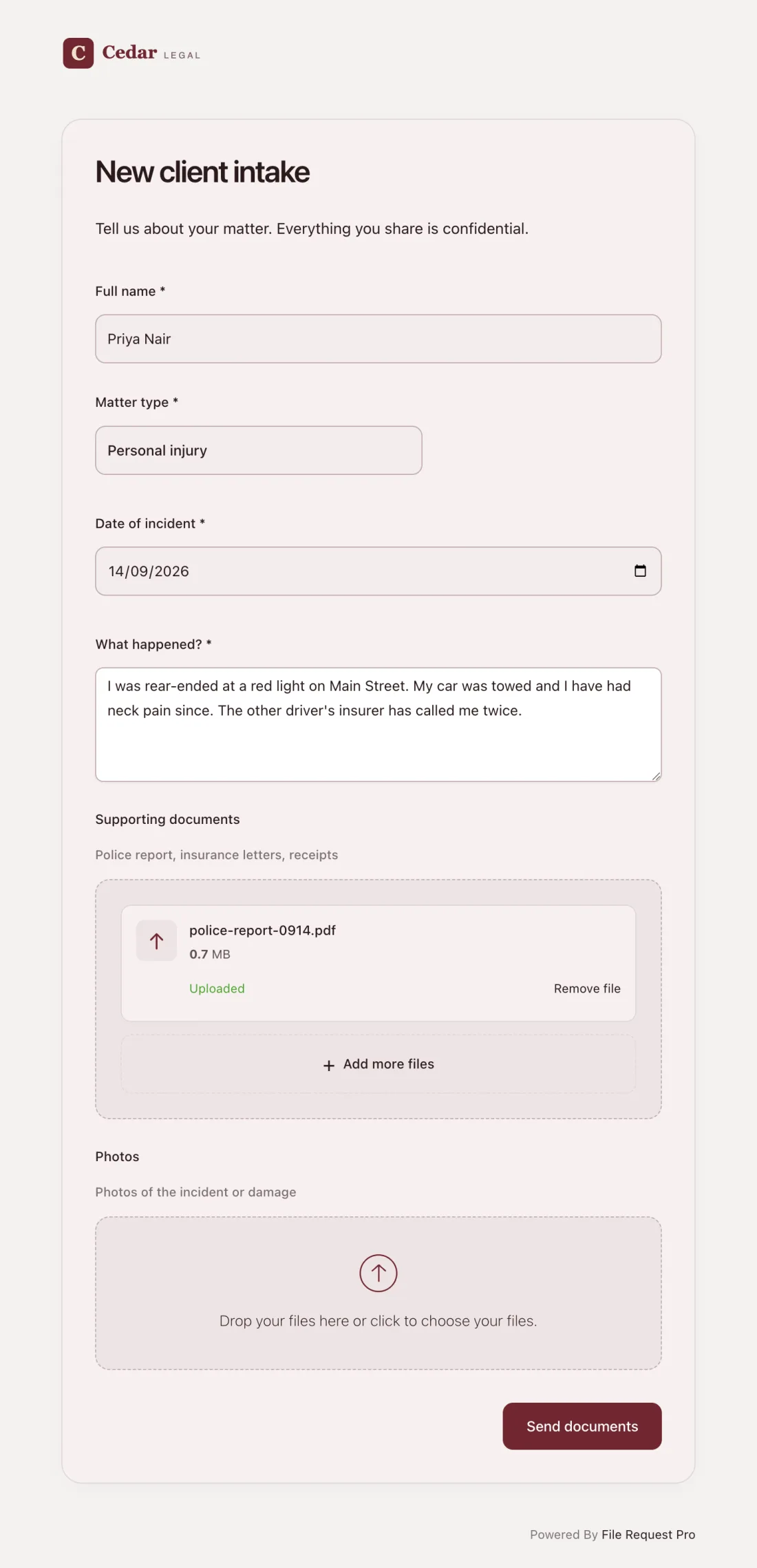
File Request Pro lets you build custom intake forms that walk clients through each section — personal details, incident information, medical history, and document uploads — in a single, guided experience. Clients complete everything from their phone or computer at their own pace.
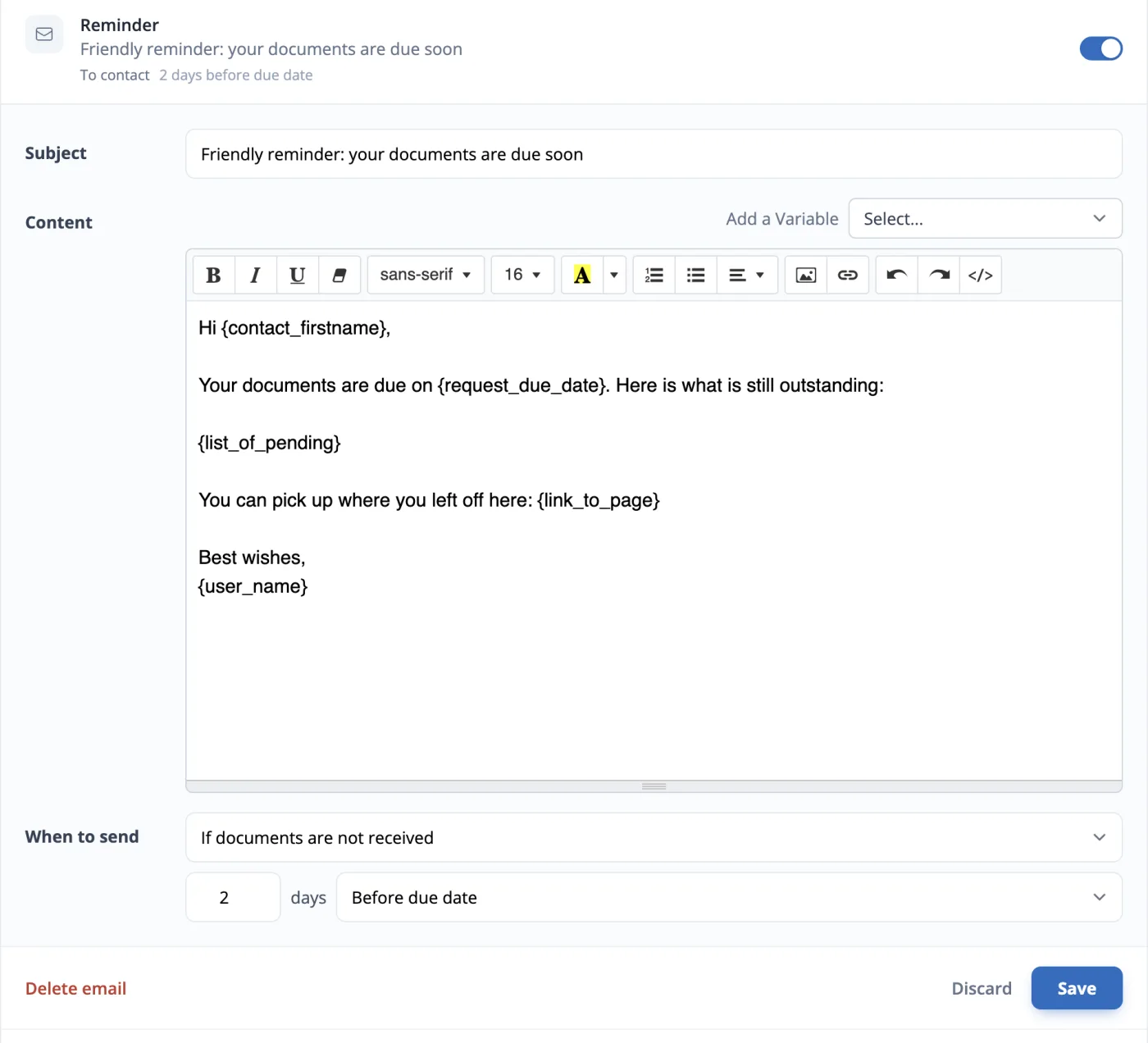
Automatic reminders follow up with clients who haven't finished, so you don't have to chase anyone for missing answers or documents.
File Request Pro stores completed submissions securely in your connected cloud storage — Google Drive, OneDrive, or SharePoint — keeping case files organized from the start. The result: faster intake, fewer gaps in your case files, and a better experience for clients during a difficult time.
Frequently Asked Questions
What should a personal injury intake form include?
A complete personal injury intake form covers client identification, incident details, medical information, legal history, insurance details, financial impact, and authorization to represent. Including case-type-specific questions (auto accident, slip and fall, medical malpractice, or workplace injury) strengthens the information you collect from the first meeting.
Why is a personal injury intake form important?
The intake form captures the facts that determine whether a case is viable and how strong the claim is. Missing information at intake means delays, follow-up calls, and potentially weaker case preparation. A structured form ensures nothing gets overlooked.
When should clients complete the intake form?
Ideally, clients complete the intake form before or during the initial consultation. Sending the form in advance gives clients time to gather documents, recall details, and provide more accurate answers. Digital intake forms make this especially easy since clients can complete them on their own schedule.
What documents should clients bring to a personal injury consultation?
Clients should bring the police report, medical records and bills, photos of the scene and injuries, insurance policy information, pay stubs showing lost wages, and any correspondence with insurance companies. A good intake form includes a document checklist so clients know exactly what to prepare.
How do you handle intake for different types of personal injury cases?
Start with a core set of questions that apply to every personal injury case (client details, incident basics, medical history, financial impact). Then add case-specific sections: vehicle and traffic details for auto accidents, property condition questions for slip and fall, treatment and consent records for medical malpractice, and employer and safety information for workplace injuries.
Can personal injury intake forms be completed digitally?
Yes. Digital intake forms reduce errors, save time, and let clients complete information at their own pace. Tools like File Request Pro allow law firms to create branded intake forms with built-in document upload, automatic reminders, and secure cloud storage — replacing paper forms and email back-and-forth entirely.
How long should a personal injury intake form take to complete?
Most clients can complete a thorough intake form in 20 to 30 minutes. Breaking the form into clear sections (personal information, incident details, medical history, financial impact) makes it manageable. Digital forms that save progress let clients return and finish later if needed.
Free Client Onboarding Checklist
Get the complete document checklist for your industry — interactive, with progress tracking.
Use the Free Checklist Tool →